Australian Shepherd Insurance, Care and Health Advice
The Australian Shepherd dog breed was developed to work with livestock and excel in dog sports. Whether participating in search-and-rescue operations or simply being a loyal companion, the "Aussie" is a fantastic breed for active families and individuals.
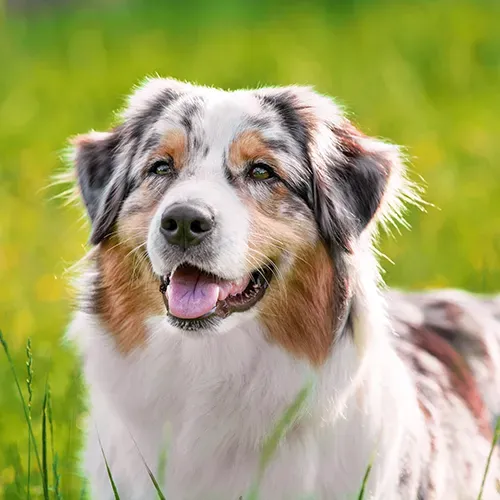
Australian Shepherd Facts


Is an Australian Shepherd Right for Me?
The Australian Shepherd is ideal for active individuals or families who can provide plenty of exercise and mental stimulation. This breed needs a strong sense of structure and purpose, making it a great choice for owners who enjoy training and participating in activities like agility, obedience, or herding trials.
Due to the Australian Shepherd's size and energy levels, they're best suited to a rural home with plenty of space.
Despite being known as the "Aussie", this breed did not originate from Australia but the Basque region of Europe. The "Australian" part of their name comes from the association with Basque shepherds who travelled from Australia to the United States in the 1800s.

What Are Australian Shepherd Puppies Like?
Australian Shepherd puppies are lively, curious, and full of energy. They're incredibly intelligent, which makes them quick learners, but they can also be a bit stubborn at times.
As with all working dogs, Aussie puppies benefit from consistent training and positive reinforcement. They respond well to praise and rewards. It's important to keep training sessions fun and engaging.
Early socialisation is also crucial to help your Australian Shepherd puppy feel comfortable with people, other pets, and new environments.
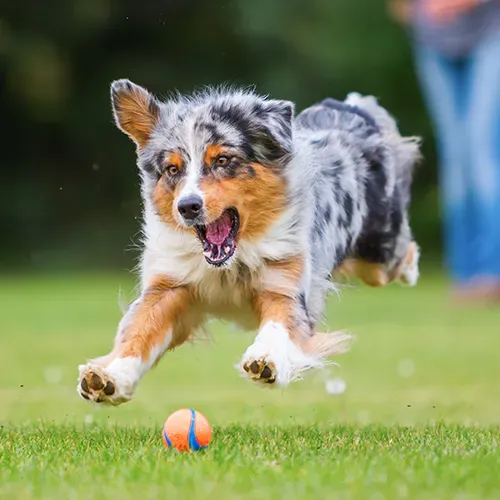
Life with an Australian Shepherd
Life with an Australian Shepherd dog is full of activity and excitement. These dogs are known for their high energy and love for physical exercise. Whether it's hiking, running, or swimming, the Australian Shepherd will eagerly join in.
Beyond their athletic abilities, these dogs are also known for their affectionate and loyal nature. They form strong bonds with their families and often seek out attention and companionship. While they love to be with their family, they can also be independent and prefer having a task to complete.
Caring for Your Australian Shepherd
Australian Shepherd breed dogs need a well-balanced diet that supports their high activity levels. A diet rich in quality protein, healthy fats, and essential nutrients is important for keeping them healthy and active.
It's essential to maintain their weight through portion control, as obesity can lead to joint problems like hip dysplasia, a common issue in the breed.
Feed your Australian Shepherd high-quality dry or wet food formulated for medium-sized, active dogs, and ensure they always have access to fresh water.
Aussies have a double coat, with a soft undercoat and a longer, wavier outer coat. To keep their medium-length coat healthy, brush them two to three times a week. You may want to increase grooming during shedding periods.
Bathing should be done as needed, usually once a month. Be sure to regularly check their ears, trim their nails every 4-6 weeks, and brush their teeth to help maintain their overall health.
The Kennel Club accepted coat colours for Australian Shepherds include solid black, solid red, blue merle and red merle. White markings are accepted on the chest, legs, and areas of the face.
Aussies are highly intelligent and trainable dogs. Consistent, positive reinforcement techniques work best when training an Aussie.
As a working dog breed, they require plenty of physical exercise to burn off excess energy. Aim for at least 60-90 minutes of exercise per day, whether through walks, runs, playtime, or dog sports.
It's also important to provide mental stimulation to keep their minds sharp. Puzzle toys, interactive games, and training exercises can help prevent boredom and keep your Aussie engaged.
Australian Shepherd Insurance
Your Australian Shepherd is unlike any other pooch. At Everypaw, we understand that, which is why we offer a range of cover levels to suit your playful pup.
Of course, our cover offers protection against expensive vet bills, but there's more to it than that. Everypaw Dog Insurance also comes with a host of additional benefits, from complementary treatment and dental cover to 24/7 access to an experienced vet team, plus so much more.
Now you know that's taken care of, you can get on with what really matters - trying to tire out that energetic Aussie dog.
Common Australian Shepherd Health Problems by Vetstream
While the Australian Shepherd is generally healthy, they can be prone to a few health conditions. We've partnered with veterinary experts at Vetstream to provide insights into potential health issues that can affect your Australian Shepherd.
Hip dysplasia is a common issue in medium- and large-breed dogs and occurs when the hip joint doesn't fit properly into the hip socket, causing pain and inflammation.
While it can be a genetic condition, diet, exercise, and weight management also play a role. Early diagnosis and appropriate treatment can help manage the symptoms and maintain your dog's mobility.
PRA is a genetic eye disease in dogs that causes gradual retinal degeneration. This condition causes vision loss, starting with night blindness and eventually progressing to complete blindness.
While there is no cure, early detection through eye exams can help manage the condition, allowing owners to make adjustments to their pet's environment to support their vision and quality of life.
A condition more common in dogs with merle patterns (especially double merles), deafness can be a concern for Australian Shepherds. Deafness is congenital and can be detected in puppies. While it doesn't necessarily affect their quality of life, it's important to understand the condition and provide appropriate training methods for a deaf dog.
Epilepsy, a neurological disorder that causes seizures, is another health concern in Australian Shepherds. While it's not always hereditary, some lines of the breed are more prone to it. Seizures can be controlled with medication, and affected dogs can live a normal life with proper care and management.

Quick Australian Shepherd Q&A
The Australian Shepherd's tail is naturally bobbed due to genetic factors, although some are born with long tails. Tail docking was historically performed by some breeders, especially in working dogs.
Yes, an Australian Shepherd's coat sheds, especially during shedding seasons. Their medium-length double coat requires regular grooming to manage shedding and prevent mats. Brushing a few times a week can help reduce the amount of loose hair in your home.
An Australian Shepherd's temperament is energetic, intelligent and loyal. They're great family dogs, but require a lot of mental stimulation and exercise. Their strong herding instincts can make them protective of their family, and they may try to herd children or other animals if not properly trained.
If your Australian Shepherd is digging, they're likely bored or lacking physical exercise. Their herding instinct and high energy levels make them want to find something to do, and digging can become a way for them to release pent-up energy.
The Australian Shepherd lifespan is between 12 and 15 years. With proper care, regular vet visits, and a healthy lifestyle, they can live long, happy lives.
That's All You Need to Know About Australian Shepherds
The Australian Shepherd is an energetic, intelligent, and loyal dog breed that thrives on mental and physical exercise. With the right amount of attention, training, and activity, an Aussie can be an excellent companion for active individuals and families.
While they may require more care than some other breeds, their loving and devoted nature makes them a rewarding pet. Whether they're participating in dog sports, working as a herding dog, or simply enjoying life with their family, the Australian Shepherd is a breed that brings joy and excitement to any home.
Content provided from Vetstream's Vetlexicon Canis
Vetlexicon is the world’s largest peer-reviewed online clinical reference source. All our content is written and peer-reviewed by over 1,000 of the world’s leading veterinarians, ensuring relevance, accuracy and quality.
- Vetstream Ltd (online) Australian Shepherd. In: Vetlexicon Canis. Vetstream Ltd, UK.
- Harari J & Langley-Hobbs S (online) Hip: dysplasia. In: Vetlexicon Canis. Vetstream Ltd, UK.
- Braund K & Mellersh C (online) Deafness: hereditary. In: Vetlexicon Canis. Vetstream Ltd, UK.
- Bagley R, Garosi L & Lowrie M (online) Epilepsy: idiopathic. In: Vetlexicon Canis. Vetstream Ltd, UK.
- Gould D, Davidson P A, Williams D, Brooks D & McKeever F (online) Retina: generalized progressive retinal atrophy. In: Vetlexicon Canis. Vetstream Ltd, UK.


