The 5 Most Common Reasons Behind Dog Humping
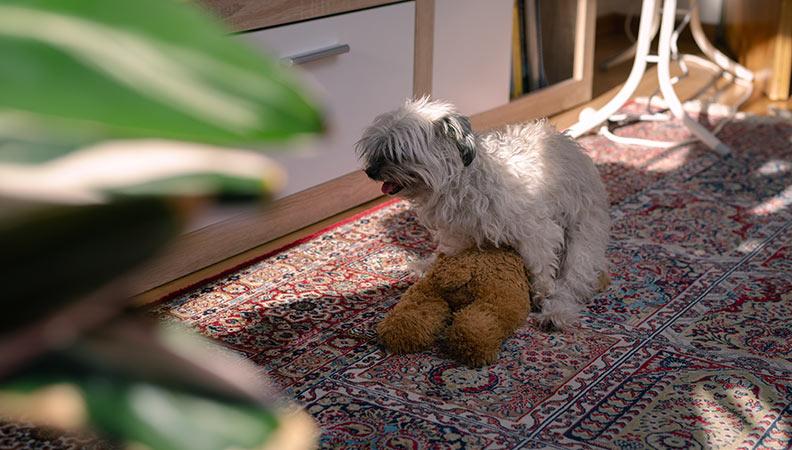
Some things are just a bit, well, embarrassing… dogs and humping is one of them! Dog humping can be dangerous, especially if your dog is a larger breed. If your dog won't stop humping, having friends over or heading out for a walk can become a bit stressful.
No one wants a dog humping their leg, and other dog owners won't appreciate your dog humping their pet either. So why do dogs do it, and how do you stop your dog from humping inappropriately?
Why do dogs hump?
Humping is a totally normal and natural dog behaviour, and all dogs do it. Humping another pet, person or a bit of furniture from time to time is perfectly normal. However, some dogs won't stop humping, or do so at inopportune moments. So, it's helpful to try to understand why they may be humping excessively.
Hopefully, once you understand why they're doing it, you'll be better placed to work out how to reduce this unwanted behaviour.
Dogs "hump" for many reasons, including:
- Sexual urges
- Expressing dominance
- Play
- Stress
- Medical conditions
Let's explore those reasons for dog humping in more detail now and try to understand each one a little better.
1. Sexual urges
Unneutered male dogs that have reached sexual maturity have normal sexual urges in response to their hormones. In younger, unneutered dogs, mounting and humping are often sexually motivated. If you don't want to breed your dog, neutering or using hormone-suppressing medications may help reduce humping.
However, as this behaviour is not only sexual in nature, there's no guarantee that neutering your dog will stop humping behaviour.
But why do female dogs hump? Humping is a natural and instinctive behaviour for female dogs too, so if you have a female dog, this article is for you too!
2. Expressing dominance
Humping can be a display of dominance. If this is the case, then it's worth speaking with a veterinary behaviourist for advice. Not all humping dogs are actually feeling dominant. Sometimes it can be a sign that they're unsure of their place in the pack, and when you have a dog that's insecure in this way, unfortunately, fights are more likely to break out.
3. Play
Humping can be a normal part of play, particularly for puppies. Well-socialised dogs soon learn from older dogs and people that this behaviour is unwelcome and stop doing it.
Dogs that haven't been so well socialised or have limited contact with other dogs may not learn this, and a veterinary behaviourist should be able to advise you how to stop this behaviour in your dog.
4. Response to stress
Some humping dogs do it to relieve stress or anxiety. If you feel this may be a factor for your dog, speak to your vet, behaviourist or a good professional dog trainer for help. They'll be able to help you work out why your dog is anxious and how you can help them.
5. Medical problem
Rarely, dogs may start humping because of medical issues. Any discomfort in the genital region may cause the dog to hump in response, but it's more likely they would display other signs, such as licking uncomfortable areas.
Persistent erection (priapism) is an unusual medical condition, and dogs may hump excessively as they try to get their penis back to its usual state. This condition is painful for the dog, and the penis may become damaged if it gets stuck out for a long time.
It's important to get urgent veterinary help if you think your dog has a persistent erection. Excessive humping may also lead to urinary tract infections if your dog rubs their genital area excessively.
How to stop a dog humping?
Safety first! If your dog is humping a person, it's your responsibility as your dog's owner to stop this behaviour and get your dog off the other person straight away.
Everyone has the right not be humped, and large dogs could seriously injure a frail person or child. Likewise, if your dog humps another dog, then it's your responsibility to stop this immediately. If you can't control your dog, you need to get urgent help from a veterinary behaviourist.
What is excessive humping in dogs?
It's important to work out why your dog is humping and whether the amount of humping they're doing is a normal, healthy amount, or whether it's excessive. Your vet or a veterinary behaviourist can help with this. If the issue is a natural sexual urge, then neutering or using hormone-suppressing medications may solve the problem.
Why do neutered dogs hump?
If humping is an issue in a neutered dog, it might be worth asking your vet to double-check their hormone levels, just in case there's any remaining hormonal tissue. Once you're sure that hormones aren't the issue, consider dominance, stress and medical problems.
Ask your vet to rule out any medical causes. If you feel that stress, dominance, etc., may be at the root of the issue, ask a veterinary behaviourist for advice, as what is required in terms of correcting this behaviour will vary from dog to dog.
Try redirecting your dog when they're humping and giving them something else to do. If they're bored, they may just want some of your time or attention, or they may just need more exercise. Sometimes redirecting them to hump an acceptable object, such as a designated pillow or toy, can help if your dog is very driven to continue humping.
Should you stop your dog from humping?
Dogs hump for many reasons, and it's important to identify the issues for your dog so you can find the right help.
Humping can be dangerous to other people and pets, so it's important you feel confident you can control your dog's behaviour. If in doubt, keep them on a lead in public in the meantime and seek support from canine professionals.
Everypaw Dog Insurance
Everypaw's Dog Insurance comes with 24/7 unlimited access to vets and vet nurses that can help with your pet's health, care, nutrition and behaviour. So you can rest assured your pup will be well looked after.
Content created by Vetstream Vetlexicon - Clinical content for veterinary professionals
Vetlexicon is the world’s largest peer-reviewed online clinical reference source for veterinary professionals. All our content is written and peer-reviewed by over 1,000 of the world’s leading veterinarians, ensuring relevance, accuracy and quality.
- Vetstream Ltd (online) Spaying/Neutering your dog. In: Vetlexicon Canis. Vetstream Ltd, UK.


