How To Deal With a Scared Cat
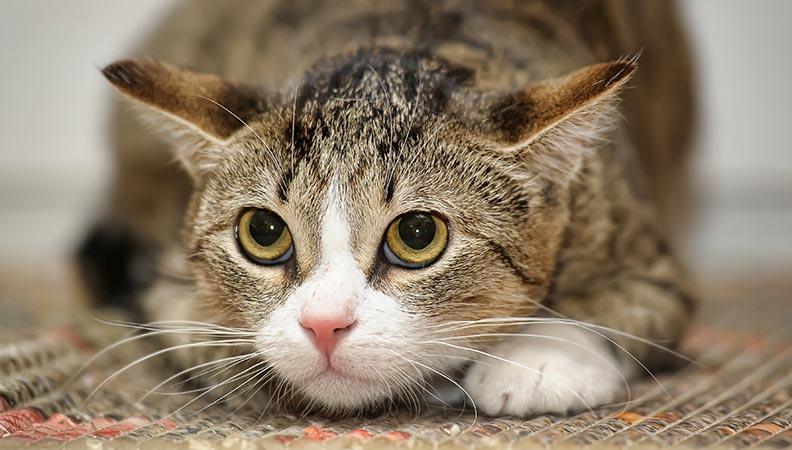
As a cat parent, you're bound to have seen your kitty react in fear to something. You'll no doubt want to help your cat feel safe, but first, you need to understand what they're scared of and how you can calm them down.
As a cat owner, we're sure you have lots of questions, like: Are cats scared of fireworks? Why are cats scared of water? And are cats really scared of cucumbers? Let's find out...
What Are Cats Scared Of?
Your cat could be scared of almost anything, even things that don't seem scary to us. It can be difficult to work out the cause. Some common cat fears include:
- Dogs or other predators.
- Fireworks.
- Loud noises.
- Other cats.
- Strangers or unfamiliar people.
- Unfamiliar objects or places.
Why Are Cats Scared of These Things?
It can be due to a previous negative experience and association. A nervous cat who's scared of going to the vets may feel this way because they've experienced pain when at the veterinary practice in the past.
Unfamiliar objects and people are feared because of the unknown. Loud noises, such as fireworks, can be so loud that they're physically painful. There's also no pattern to when the noise is coming, and they have no idea where the noise is coming from.
Are Cats Scared of Water?
Most people think cats are scared of water, but it's more of an aversion than a fear. Most cats don't like water because wet fur is heavy and uncomfortable, and makes them less agile. Cold water can cause a shock response and cause their body temperature to drastically drop.
But some cat breeds actually enjoy swimming and playing in water, like Bengals, the Turkish Van and Maine Coons.
Why Are Cats Scared of Cucumbers?
This may seem like an unusual question, but there are many viral videos online of cats reacting with fear to cucumbers. When an unfamiliar object is presented to a cat, it will react with fear and curiosity. Unless a positive association is made with it, like being rewarded with a treat whenever a cucumber is present, they may develop a negative association and continue to fear the item.
Although a cat's response to objects may be comical to watch, you should never intentionally scare a cat. If your cat is jumpy and nervous, it's not fair to antagonise them. Just like in humans and other animals, heightened stress levels can lead to health issues. If your cat shows signs of fear, try to create a positive association with the item or remove it.
How Do I Know if My Cat is Scared?
Body language and cat noises can be the best tellers of a scared or distressed cat. The most common signs of stress in cats are:
- Arched back and puffed-up tail.
- Biting or scratching.
- Flattened ears or rapid ear movements.
- Freezing or crouching low to the ground.
- Hiding.
- Hissing or spitting.
- Pooing or peeing outside of their litter box.
- Running away.
- Tucked tail with a swishing tip.
- Wide eyes with big pupils.
- Yowling or howling.
Some cats are really good at hiding their fear, so you may not realise they're feeling threatened. You may not see or hear the cause of their fear response, so it can be challenging to know how to help them.
But you do know your cat, and you will notice if they're acting out of character, so keep an eye out for regular occurrences and possible triggers.
How To Calm Down a Cat
Finding out what your cat is afraid of will help you calm them down. If you know what your cat fears, try to remove it or reduce their exposure to it.
If your cat is scared of the vacuum cleaner, make sure they're in a different room or outside when you're using it. If your cat is scared of loud noises, such as fireworks or thunderstorms, try closing the curtains and playing the radio or TV to help cover up the noise. Make sure they're kept inside on fireworks night, New Year's Eve or when a storm is forecast.
One of the most important things to do when you have a scared cat is to provide them with a hiding place. This can be a den behind the sofa, or a blanket on top of a wardrobe. Any space that's cosy and quiet will help to calm scared cats.
You must try to stay calm when a nervous cat shows signs of distress. They'll pick up on your mood, so a calming presence will provide reassurance.
If you're unable to calm your cat down, contact your vet. They can prescribe medication and refer you to a behavioural specialist, who will focus on desensitisation and counterconditioning. This means changing how your cat perceives something, so they no longer feel threatened by it.
How Can I Prevent My Cat From Being Scared?
Between 2 - 7 weeks of age is a sensitive period for kittens. They develop the fear response at 6 weeks, so it's important to expose them in a positive way to lots of new and unfamiliar sounds, smells, people, and objects. This will help them to be more confident and less fearful as an adult.
When introducing your cat or kitten to something new, continue to praise and reward them with treats when they are acting confidently. If your cat's scared of the vet, take them for regular positive visits to get them used to travelling there and being in the veterinary practice. By doing this, they'll begin to associate it with something positive, like eating, playing, and getting affection, rather than experiencing pain.
Even when training, never force your cat to be somewhere that causes them distress. Let them retreat to a safe space when it becomes too much for them. You can always try again later when they have calmed down.
All cats will experience fear at multiple points in their life. For most, it will be short-lived, but if the stress is long-term, it can lead to health issues. Fortunately, it's easy to spot a scared cat through their body language, vocalisations and behaviour, and there are many ways you can help them to calm down. But if you're concerned about your cat, contact your vet for advice and support.
Everypaw Cat Insurance
Everypaw's Cat Insurance comes with 24/7 unlimited access to vets and vet nurses that can help with your pet's health, care, nutrition and behaviour. So you can rest assured your kitty will be well looked after.
Content created by Vetstream Vetlexicon - Clinical content for veterinary professionals
Vetlexicon is the world’s largest peer-reviewed online clinical reference source for veterinary professionals. All our content is written and peer-reviewed by over 1,000 of the world’s leading veterinarians, ensuring relevance, accuracy and quality.
- Taylor A & Vetstream Ltd (online) Kitten socialisation. In: Vetlexicon Felis. Vetstream Ltd, UK.
- Overall K & Piotti P (online) Fireworks – fear behavior. In: Vetlexicon Felis. Vetstream Ltd, UK.
- Vetstream Ltd & Overall K (online) Aggression: fear. In: Vetlexicon Felis. Vetstream Ltd, UK.
- Vetstream Ltd & Piotti P (online) Noise sensitivities in cats. In: Vetlexicon Felis. Vetstream Ltd, UK.
- Overall K & Radosta L (online) Reducing stress (visits to practice). In: Vetlexicon Felis. Vetstream Ltd, UK.
- Ellis S & Vetstream Ltd (online) Stress in cats. In: Vetlexicon Felis. Vetstream Ltd, UK.


