Causes, Signs and Treatment of Cushing's Disease in Dogs
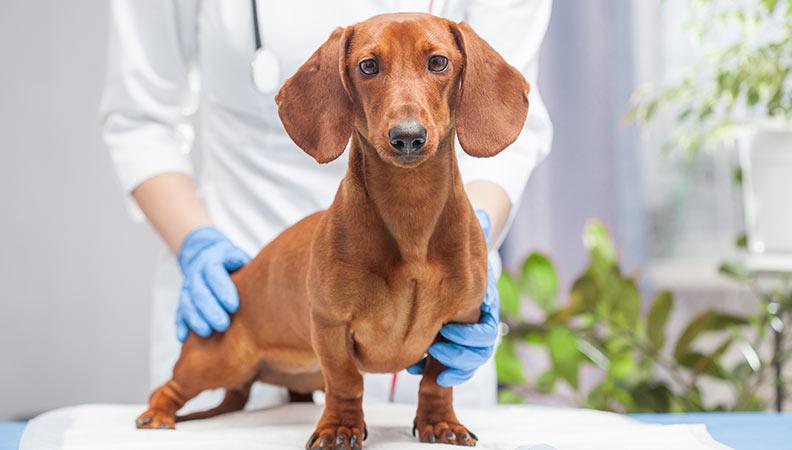
Cushing's disease in dogs is a common endocrine disease, also known as hyperadrenocorticism, Cushing's disease typically affects middle-aged to older dogs.
Owners often overlook the early signs of Cushing’s disease in dogs and put their dog's symptoms down to ageing. Once diagnosed and treated, dogs with Cushing's can lead normal, full lives, but it's important to get an early diagnosis so treatment can start as soon as possible.
So, what are the symptoms, and how is Cushing's disease in dogs treated? This guide will answer all the questions dog owners may have about this common disease.
What is Cushing's Disease in Dogs?
Cushing's disease is named after the doctor Harvey Cushing, who first recognised the disease. It's caused by prolonged exposure to cortisol (so it is sometimes also known as hypercortisolaemia). Cortisol is a steroid hormone that's produced by the adrenal glands.
Cortisol has many effects - it affects the immune system, metabolism and skin and is vital to maintain health. The amount of cortisol produced is precisely balanced by the pituitary gland located at the base of the brain. The pituitary gland signals the adrenal glands to produce cortisol during times of stress. However, in a dog with Cushing's, the levels of cortisol produced are always too high.
Nearly all cases of Cushing's disease are caused by a tumour in the pituitary gland (pituitary-dependent Cushing's disease). The tumour leads to excess production of the adrenocorticotropic hormone (ACTH) and the adrenal glands become enlarged.
What Causes Cushing's Disease in Dogs?
Miniature poodles, Toy poodles, Dachshunds and small Terriers (Yorkshire Terriers in particular) may be more susceptible to developing Cushing's disease.
A few cases of Cushing's are caused by a benign or a malignant tumour in the adrenal glands (adrenal-dependent Cushing's disease). This results in one adrenal gland becoming enlarged and producing too much cortisol.
In addition to Cushing's disease resulting from tumours, the disease can also be caused by the side effects of steroid treatment. Dogs that have been prescribed steroids by their vet to treat another condition may develop Cushing's. Dogs with Cushing's may also develop diabetes mellitus, as high cortisol levels can lead to insulin resistance.
Symptoms of Cushing's Disease in Dogs
In early-stage Cushing's disease in dogs, symptoms are subtle and variable, so owners may not recognise them. Often, the disease is detected by the dog's vet during a regular health check.
While the early signs of Cushing's can be missed, the symptoms of advanced Cushing's disease in dogs are more obvious. The most obvious symptom of Cushing's is increased thirst (although not all dogs will have this).
If you notice your dog drinking more than usual or needing to wee more (especially during the night), make an appointment with your vet for a check-up. Increased appetite and weight gain are other signs, as well as changes in haircoat and skin. Hair is typically lost over the dog's flanks; it will be seen on both sides and will be symmetrical. The hair loss isn't caused by your dog scratching! The skin becomes thin and fragile, and skin lesions may be seen. Dogs may also develop purple-pink stretch marks.
As steroid hormones cause muscle wasting, your dog may find exercise more difficult. Weakened stomach muscles and an enlarged liver (due to fat being deposited) can cause the tummy to distend, so the dog appears to be 'pot-bellied'. Female dogs may stop coming into season and, if the pituitary gland tumour is large enough, neurological signs may be seen.
How is Cushing's Disease in Dogs Diagnosed?
Your vet may suspect Cushing's disease based on your dog's symptoms, but specific blood tests will be taken to confirm the diagnosis. A urine sample will also be collected to check for cortisol and to assess whether the dog has diabetes mellitus or a urinary infection.
To diagnose Cushing's disease, your vet will perform adrenal function testing using an ACTH stimulation test. Blood tests to measure the dog's cortisol levels will be taken before and after the injection of hormones that affect the amount of cortisol produced by your dog. An exaggerated cortisol response to this test will confirm a diagnosis of Cushing's. Your vet may also use a low-dose dexamethasone suppression test and an ACTH assay.
Your vet will want to establish the type of Cushing's your dog has, so ultrasound scans of the liver and adrenal glands will be performed to determine whether the disease is pituitary- or adrenal-dependent. If a mass is seen on one adrenal gland, this suggests adrenal-dependent Cushing's disease, whereas masses on both adrenal glands suggest pituitary-dependent disease. The scans will allow the size of any adrenal or pituitary tumours to be assessed. X-rays and abdominal CT or MRI scans may also be taken.
Treatment of Cushing's Disease in Dogs
Treatment for Cushing's can be expensive – your dog will need medication and monitoring for the rest of their life. Most dogs with Cushing's are prescribed an oral medication called Trilostane and will have regular blood tests to assess their treatment and adjust the dose if needed. Cushing's disease in dogs' treatment typically involves lifelong medication and regular veterinary check-ups to help manage symptoms and maintain your dog's quality of life.
Treatment for Cushing's disease in dogs can have side effects, and hypoadrenocorticism can result if the dog's cortisol levels have been reduced too much. If the dog has persistently low cortisol levels, the medication will be stopped, and the dog's condition reassessed.
In rare cases, it may be possible to treat Cushing's disease by removing the tumour, but the surgery is complex and carries significant risks. Treating Cushing's with surgery may not be available in your area.
What is the Life Expectancy in Dogs with Cushing's Disease?
With treatment, the life expectancy of dogs with Cushing's disease is unaffected. But if left untreated or the dog doesn't respond to therapy, life expectancy will be severely reduced.
But what are the final stages of Cushing's disease in dogs?
Sadly, the symptoms will just get more severe if your dog doesn't receive treatment, and their health and quality of life will rapidly decline. Euthanasia may then become the kindest option.
Cushing's disease is a common condition in senior dogs. If you're seeing any signs of Cushing's Disease in dogs, such as increased thirst and appetite, hair loss and lethargy, don't put this down to ageing – book an appointment with your vet for tests.
Dogs with Cushing's will need long-term medication and careful monitoring, but most will be able to have a good quality of life after treatment.
Everypaw Dog Insurance
Everypaw's Dog Insurance comes with 24/7 unlimited access to vets and vet nurses that can help with your pet's health, care, nutrition and behaviour. So you can rest assured your pup will be well looked after.
Content created by Vetstream Vetlexicon - Clinical content for veterinary professionals
Vetlexicon is the world’s largest peer-reviewed online clinical reference source for veterinary professionals. All our content is written and peer-reviewed by over 1,000 of the world’s leading veterinarians, ensuring relevance, accuracy and quality.
- David Bruyette, Ian Ramsey & Samuel Fowlie (online) Hyperadrenocorticism. In: Vetlexicon Canis. Vetstream Ltd.
- David Bruyette & Sarah Caney (online) Cushing’s disease (hyperadrenocorticism). In: Vetlexicon Canis. Vetstream Ltd.


