Birman Cat Insurance, Care and Health Advice
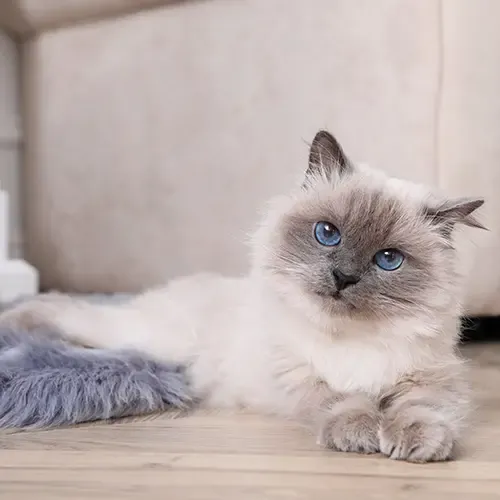
With their silky coats, stunning sapphire blue eyes, white paws, and bushy tails, Birmans are beautiful, but their charm doesn’t stop there. They also make great companions. If you’re thinking of adding a Birman to your household, you won’t be disappointed. This breed guide gives you all the information you need on how to care for your Birman cat.
Birman Cat Facts


Is a Birman Cat Right for Me?
Birmans are easy to care for and will fit in well in most households. Sociable and laid-back, they're suited to families with children and other pets. They enjoy company so if you are out all day, they may need another furry friend to stop them from getting lonely and bored.
The Birman name comes from Birmanie - the French name for Burma (now Myanmar). The Birman may be known as the Sacred Cat of Burma, but there’s no clear record of the breed’s origin. It may be that the cats were a temple cat kept by priests at the Lao Tsun temple in Burma and that a pair of breeding cats were given as thanks to two soldiers for defending the temple. When the soldiers returned to France in 1919, they took the cats with them.
The breed almost disappeared during World War II but was rebuilt through breeding with Persian and Siamese cats and was introduced into the UK in the 1960s. Nowadays, most are kept as indoor cats.
What Are Birman Kittens Like?
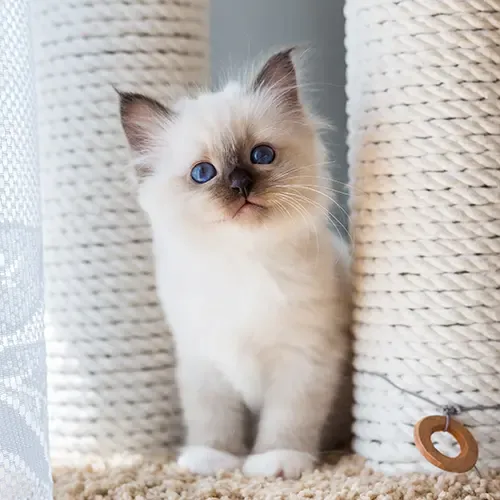
Birman kittens are born white and develop their pointed colours as they get older. They’re curious and enjoy playing! Having lots of toys to play with will keep them busy and out of trouble. Make sure that they have been socialised from an early age so they grow into confident, happy adults.
Life with a Birman Cat
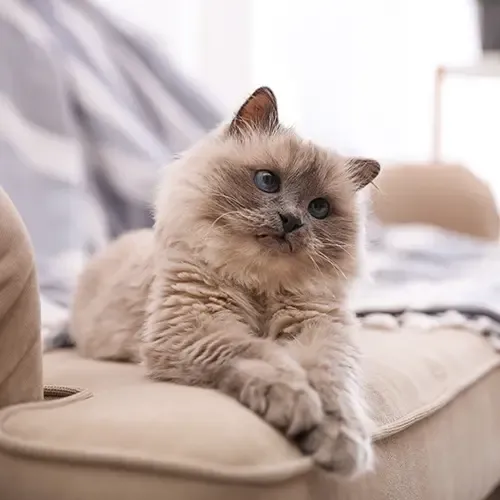
Birmans have everything going for them. Beautiful, intelligent, easy-going, affectionate and easy to care for. They make great companions and love to play. Birmans also don’t have a strong hunting instinct, so shouldn’t bring too many surprises into the house!
Caring for Your Birman
If you buy your kitten from a breeder, they can provide you with a feeding schedule. Try to feed your Birman the same cat food and at the same time every day. If you decide to change their diet, it’s best to do it gradually to avoid any tummy upsets.
If you’re unsure what to feed or how much to feed, ask vet or vet nurse for advice. They can recommend a nutritious and balanced diet that will fit the needs of your cat and keep them healthy.
Birmans are semi-longhaired cats. All are pointed and come in a variety of colours including seal, blue, lilac, red, cream, chocolate and tortie. They have a single coat, which means that their silky coats have no undercoat, and so are less prone to matting.
Grooming a Birman cat is easy - all they need is a weekly brush or comb to keep their coats in good condition.
Birmans are intelligent and curious – they'll be interested in whatever you are doing and will try to join in. Toilet or litter training will be picked up quickly. You can also train your cat tricks such as playing fetch. They'll enjoy interactive play and puzzle toys as well.
There are no special exercise needs for the Birman cat but make time for regular playtime together. This will strengthen the bond between you and help to keep them fit and healthy. Birmans are suited to being indoor cats.
Birman Cat Insurance
This beautiful, laid back breed of cat can make the perfect addition to your home, it makes sense to protect those paws so you can keep them as happy and healthy as they possibly can be. When it comes to illness or injury, it’s good to think about insuring your Birman, and how it can help if anything happens to them.
Everypaw’s Lifetime Cat Insurance is available from 8 weeks of age with a range of cover levels to choose from. As well as vet fee cover, all Everypaw policies come with a range of additional benefits, including access to a team of RCVS qualified vets whenever you need them through PawSquad.
Common Birman Cat Health Problems by Vetstream
Birmans can be affected by the usual health problems such as obesity, hyperthyroidism in cats and kidney problems that affect other breeds too, especially as they get older. But there are also some breed-specific conditions that you should be aware of.
Having regular vet health checks means that these conditions can be spotted at an early stage. Everypaw has teamed up with veterinary experts Vetstream to help you spot any signs of these.
HCM is a common heart disease in cats and might be inherited in the Birman breed. In HCM, the heart muscle becomes thick, which can lead to heart failure. Screening using ultrasonography can identify affected cats. If recognised early enough, long-term medication and other steps can slow the disease down.
Cats with HCM should not be bred from.
Autosomal dominant polycystic kidney disease (AD-PKD) is an inherited condition. Known to affect some Birmans, it causes cysts to form in the kidneys. Affected cats usually develop signs of kidney disease around 3-10 years of age.
There are treatments that may help to improve the cat’s quality of life but unfortunately there’s no cure. Cats with PKD should not be allowed to breed to prevent them passing it on to their kittens.
Congenital hypotrichosis is a rare condition that can be inherited in Birman cats. It leads to hair loss and kittens are born either hairless or with a thin haircoat. They’ll also be prone to infections and have a shortened life expectancy. A genetic test is now available so that Birmans carrying the mutated gene can be identified and not used for breeding.
Birmans can be affected by a congenital defect known as a corneal dermoid. This condition causes hair to grow on the cornea or on the conjunctiva in the eye. Surgery may be needed to remove the hair.
Quick Birman Cat Q&A
No cats are completely hypoallergenic, but Birmans cats and kittens shed less than some other breeds and so produce less dander. This means they might cause less allergic symptoms for people with a cat allergy.
Despite having a semi-long and silky coat, Birmans don’t have an undercoat which means they’re less prone to matting and don’t shed as much as other long-haired breeds. They also don’t need as much grooming – a brush or comb once or twice a week is usually enough to keep their coats looking good.
Birman cats can live to 12-16 years, which is the average life expectancy for most domestic cats.
Yes, Birman cat’s personalities are very friendly, gentle cats. They’re sweet-natured, laid-back and love human company. They also like to have another feline friend to keep them company and will get along with cat-friendly dogs as well.
That’s All You Need to Know About Birmans
Birman breed cats have everything going for them. With their silky coats, blue eyes, bushy tail and sweet, laid-back temperament, these gentle and friendly felines will charm everyone. They’re also easy to care for. The only downside is that they like company so much that they might need a littermate or companion cat (or dog) so they don’t get too lonely and bored when their family’s out.
Content created by Vetstream Vetlexicon - Clinical content for veterinary professionals
Vetlexicon is the world’s largest peer-reviewed online clinical reference source. All our content is written and peer-reviewed by over 1,000 of the world’s leading veterinarians, ensuring relevance, accuracy and quality.
- Vetstream Ltd (online) Birman. In: Vetlexicon Felis. Vetstream Ltd, UK.
- Serena Brownlie, Phil Fox, Philip K Nicholls, Penny Watson (online) Heart: hypertrophic cardiomyopathy. In: Vetlexicon Felis. Vetstream Ltd, UK.
- Vetstream Ltd (online) Cardiomyopathy in your cat. In: Vetlexicon Felis. Vetstream Ltd, UK.
- Martha Cannon, Rachel Korman (online) Kidney: autosomal dominant polycystic disease. In: Vetlexicon Felis. Vetstream Ltd, UK.
- Vetstream Ltd (online) Kidney disease in your cat. In: Vetlexicon Felis. Vetstream Ltd, UK.
- Rosanna Marsella, Ian Mason, David Scarff (online) Congenital hypotrichosis. In: Vetlexicon Felis, Vetstream Ltd, UK.
- Dennis E Brooks, Peter Renwick, David Williams (online) Cornea: dermoid. In: Vetlexicon Felis, Vetstream Ltd, UK.


