Why Does My Cat Lick Me?
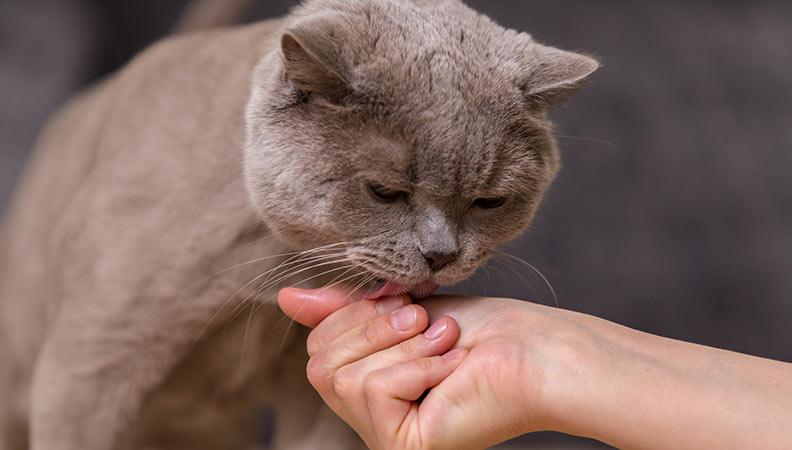
Have you ever found yourself wondering, "Why does my cat lick me"? Well, you're not alone! Cats have a variety of ways of showing affection, and licking is one of the most common.
But what does it mean when a cat licks you, and why do they sometimes follow a lick with a bite?
In this article, we'll explore the reasons behind your cat's licking behaviour and help you understand the message your feline friend is trying to convey.
Why do cats lick you?
We all know that cats spend a lot of time licking themselves and you. But did you know that there could be a selection of reasons behind why cats lick.
Affection and social bonding
For your cat, licking is a form of communication. Cats lick each other to groom and nurture their companions.
Much like mother cats lick their kittens to groom and comfort them, your cat may be trying to care for you in the same way. Cat licking can be positive; it's a way to show affection, and this behaviour helps build trust and show that they feel good, safe, and secure around you.
Mutual grooming helps build and reinforce strong bonds. So, you may find your cat starts licking you when you're brushing or petting them.
Cleaning
Another reason cats lick is when spending time grooming. A cat's tongue is covered in tiny, backwards-facing barbs called papillae, which help them remove dirt and debris from their fur (and your skin) while also distributing natural oils.
But why do cats clean you? Cats are naturally very clean animals, and their grooming behaviour extends to those that they care for. This includes their offspring, furry companions, and owners.
Attention
Sometimes, cat licking is less about cleaning and more about seeking attention. Cats are clever creatures, and they quickly learn that licking their owners often gets a reaction.
Whether they're asking for petting, snacks, or simply your company, cat licking is their way of saying, "Pay attention to me!"
Marking territory
Cats also use licking to mark their territory. Your cat has scent glands on its face, paws, and tongue. When they lick you, they could be marking you as "theirs", claiming ownership of their human.
This behaviour is often seen in multi-cat households, where each cat may try to establish their place in the social group or hierarchy by marking their territory.
Licking you makes you smell like them, reinforcing the bond and ensuring they feel secure in their environment.
Comfort and stress relief
Just like some people bite their nails or fidget when they're anxious, cats occasionally lick to calm themselves down.
If your cat is feeling stressed or anxious, licking can be a soothing behaviour that helps them feel more comfortable. If your cat has started licking you in a seemingly compulsive way, it could be a sign that they're feeling uneasy and are using licking as a self-soothing mechanism.
Pay attention to their body language and surroundings - if there are changes, loud noises, or unfamiliar situations, they may be turning to licking for comfort.
Why does my cat lick me, then bite me?
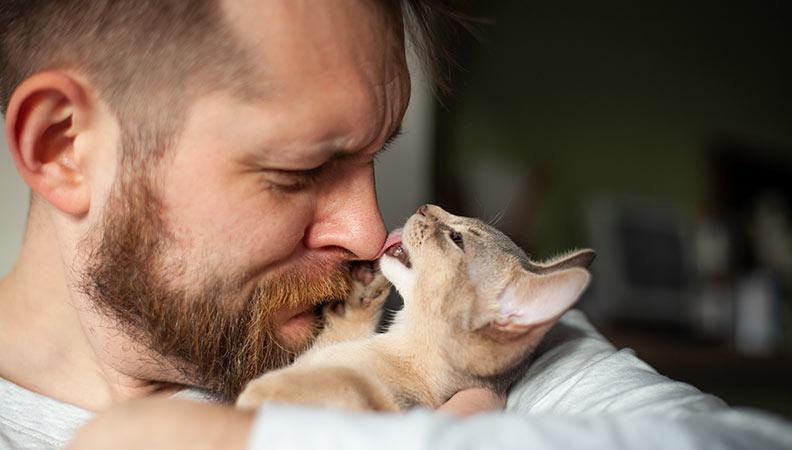
A lick followed by a bite can be a confusing message to pet parents, especially when licking seems affectionate. There are a few possible explanations for this behaviour:
Overstimulation
Some cats are more sensitive to physical touch than others. What may start as a gentle lick could escalate into biting or scratching if your cat becomes overstimulated by the contact.
Cats have different thresholds for petting, and if your cat has been licking for a while, they may bite as a way to signal that they've had enough.
Playfulness
Sometimes, a bite after licking is simply a playful gesture. Cats are instinctively playful, and their behaviour might be a mix of affection and a desire for interaction. A playful bite is often gentle and not meant to harm.
Redirected aggression
In rare cases, your cat might bite due to frustration or irritation. If there's something that is stressing them out, like a loud noise or another animal, they may channel that stress into a bite after they've stopped licking you.
Is it safe to let your cat lick you?
Generally, it's safe for your cat to lick you. However, you should keep in mind that a cat's tongue is not as clean as we might think.
Cats groom themselves and others, so while it's generally a sign of affection, it's not the most hygienic habit. Be sure to wash your hands and any licked areas to protect yourself from germs and bacteria.
If you notice any changes in your cat's licking behaviour, such as excessive licking, it could indicate a health issue and should be checked by your vet.
Understanding your cat's licking behaviour
When your cat starts licking you, it's important to consider the reason why. Your cat's body language can give you clues about how they're feeling.
A relaxed posture, slow blinking, and gentle purring usually mean they're feeling affectionate. But if your cat is tense, twitching their tail, or showing signs of stress, the licking could be an attempt to soothe themselves or communicate discomfort.
How to get a cat to stop licking
If you'd like to stop your cat from licking you, try offering them a toy. You could also try playing with your cat and engaging in interactive games to distract them. Ensure your cat feels comfortable, relaxed, and safe in their environment to minimise stress-related licking.
So, what does it mean when a cat licks you?
There are many reasons why cats lick you - from showing affection and marking their territory, to cleaning you or seeking attention.
Understanding the context and interpreting your cat's body language will help you better understand why your cat has started licking, and it will strengthen the bond between you and your companion. While cat licking is generally harmless, it's important to monitor your cat's behaviour and intervene if the licking becomes excessive or is accompanied by other signs of stress or discomfort.
Whether it's to show love, clean you, or simply get your attention, a cat licking you is often just another way your furry friend is communicating with you
Everypaw Cat Insurance
Everypaw's Cat Insurance comes with 24/7 unlimited access to vets and vet nurses that can help with your pet's health, care, nutrition and behaviour. So you can rest assured your kitty will be well looked after.
Content created by Vetstream Vetlexicon - Clinical content for veterinary professionals
Vetlexicon is the world’s largest peer-reviewed online clinical reference source for veterinary professionals. All our content is written and peer-reviewed by over 1,000 of the world’s leading veterinarians, ensuring relevance, accuracy and quality.
- Vetstream Ltd & Fear Free (online) Behavior in cats – what's the norm? In: Vetlexicon Felis. Vetstream Ltd, UK.
- Ellis S, Vetstream Ltd & Fear Free (online) Stress in cats. In: Vetlexicon Felis. Vetstream Ltd, UK.
- Vetstream Ltd & Fear Free (online) Over grooming (feline psychogenic alopecia). In: Vetlexicon Felis. Vetstream Ltd, UK.


