Everything You Need to Know About Weepy Eyes in Dogs
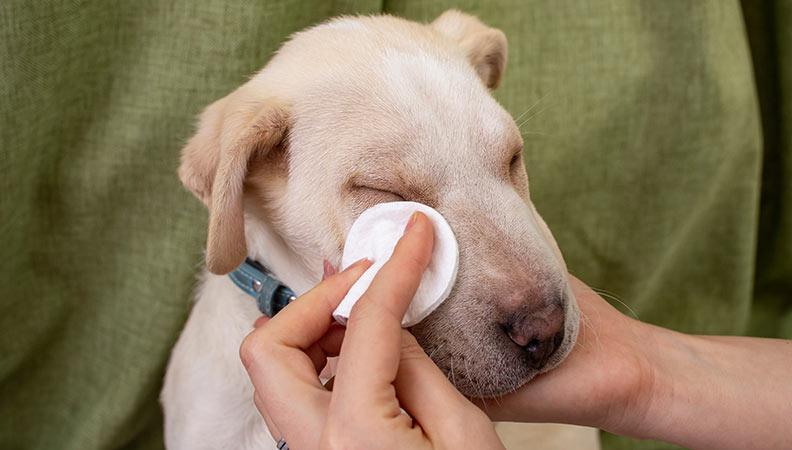
It's not uncommon to see a dog with teary eyes, particularly after a walk. But when should you be concerned?
Tears play a crucial role in cleaning and protecting the surface of the eye by providing nutrition, oxygen and lubrication. If the tear ducts become blocked, the eye is left open to infection, and it can be damaged. Excessive tearing is the eye's defence mechanism, and there may be a problem.
What Causes Weepy Eyes in Dogs?
Some of the most common causes of dog weepy eyes are:
- Allergies and irritants: Common dog allergens like pollen can cause watering eyes, as can irritants like dust and smoke.
- Blocked tear ducts: If the tear ducts are blocked, tears will spill over the eyelid instead of draining away internally.
- Breed-related issues: Many breed-related eye conditions can cause weepy eyes, like 'cherry eye' (third eyelid gland prolapse).
- Conjunctivitis: Inflammation of the conjunctiva (pinkish surface surrounding the eyeball and third eyelid), caused by eyelid deformities, infections, 'dry eye' or immune system diseases.
- Corneal ulcers: A hole in the clear covering of the eyeball (cornea), caused by trauma, eyelash issues, breed-related problems, entropion, infections, or 'dry eye'.
- Dry eye: Insufficient tear production. Tears lubricate the eye to aid blinking and clear away debris; they also have antibacterial properties that help fight infection. Dry eye can lead to blindness due to scarring and pigmentation of the cornea.
- Ectropion: The eyelid rolls out, meaning that the lid doesn't wipe the whole eye when the dog blinks.
- Entropion: The eyelid rolls inwards, causing the eyelashes and eyelid hair to rub against the dog's eye.
- Eyelash condition: Trichiasis occurs when the eyelashes grow inwards towards the eye rather than outwards. This causes them to rub against the surface of the eye.
- Eyelid growths: Lumps that form on the eyelid are common in dogs, with most being non-cancerous. Lumps can cause irritation and weeping.
- Foreign body: Often a grass seed that is stuck in the eye.
- Trauma: Damage to the eye surface caused by something like a cat scratch, thorn or stick.
- Uveitis: Inflammation of the structures that make up the uvea. Causes of uveitis include tumours, trauma, diabetes and infections.
- Wind exposure: Walking in windy conditions can cause weepy eyes, but this should clear up soon after returning home.
What Should I Do About My Dog's Weepy Eyes?
Reddish-brown tear staining is common in white dogs and is nothing to be concerned about. It's also common for dogs to have eye discharge buildup, like humans get after a night's rest.
A dog's weepy eyes become a concern when they don't clear up quickly or are accompanied by other symptoms. This is when you'll need to take your dog to see your vet.
Signs of Eye Conditions in Dogs with Runny Eyes
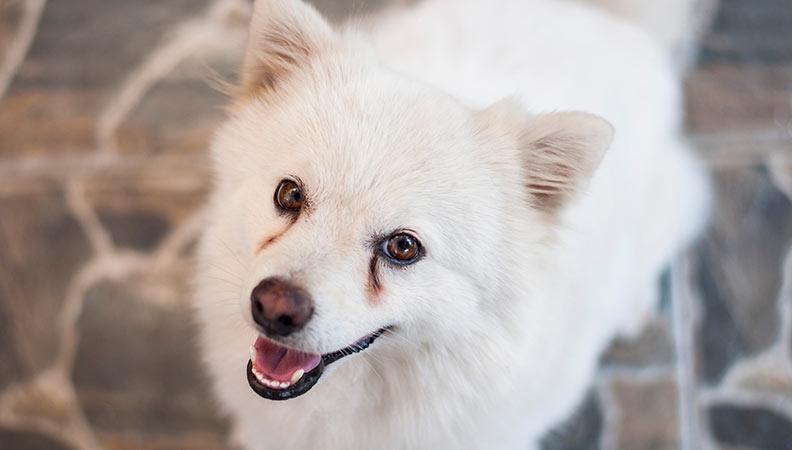
The most common types of eye conditions will have one or more of the following symptoms.
- Bloodshot eyes
- Inflammation
- Thick yellow/green discharge
- Excessive tearing
- Reduced vision
- Squinting
- A visible foreign body stuck on the eye
- Excessive rubbing/pawing of the face
- Sensitivity to light
Excessive tearing and eye discharge occur when the immune system attacks bacteria. So, if you notice particularly watery eyes or they're looking gunky, it's likely your dog has an eye infection.
If your dog has something in their eye, like dirt or grass seeds, tears from the eye can usually wash it away. If the foreign object cannot be removed in this way, a trip to the vet may be needed.
How to Clean a Dog's Weepy Eyes
If your dog has weepy eyes and no other symptoms, keep their eyes clean. To clean your dog's eyes, soak a soft cotton wool ball in warm water and gently wipe over and around your dog's eye.
Always wipe away from the eye and use a new, clean cotton wool ball for each wipe. Don't use the same ball for both eyes, as this can spread an infection if one is present.
If your dog has other symptoms and has been seen by a vet, they may have been given treatment, but your vet will likely also advise you to clean their eyes daily.
How to Get Rid of Weepy Eyes in Dogs
Your vet will carry out a full health and eye examination to find the cause of your dog's weepy eyes. Treatment usually involves eye drops or ointments that you'll be shown how to administer and will then need to continue at home. Complete the full course of medication to ensure the infection is fully cleared, as there's a risk it will return.
Will My Dog Need Surgery to Treat Weepy Eyes?
Surgery may be needed if the cause of weepy eyes is a foreign body, breed-related, or an eyelid/eyelash issue.
Surgeries are performed under general anaesthesia, which comes with risks, but your vet will discuss these with you.
Your dog will need to wear an Elizabethan/buster collar until they've fully recovered to prevent them from rubbing their eye. They'll also be prescribed pain relief that you'll need to give to your dog at home, usually for a week following surgery.
Should You Be Worried About Runny Eyes in Dogs?
Weepy eyes are not uncommon in dogs, but it's best to have a vet check for any underlying issues that need treatment. Always contact your vet if you notice symptoms of wider eye issues, such as red eyes, inflammation, reduced vision, or excessive pawing of the face.
Most causes of weepy eyes can be resolved with eye drops or surgery. Cleaning your dog's eyes regularly will help remove dirt, prevent infection, and maintain your pup's overall eye health.
Everypaw Dog Insurance
Everypaw's Dog Insurance comes with 24/7 unlimited access to vets and vet nurses that can help with your pet's health, care, nutrition and behaviour. So you can rest assured your pup will be well looked after.
Content created by Vetstream Vetlexicon - Clinical content for veterinary professionals
Vetlexicon is the world’s largest peer-reviewed online clinical reference source for veterinary professionals. All our content is written and peer-reviewed by over 1,000 of the world’s leading veterinarians, ensuring relevance, accuracy and quality.
- Vetstream Ltd (online) Conjunctivitis in dogs. In: Vetlexicon Canis. Vetstream Ltd, UK.
- VetFolio & Vetstream Ltd (online) Eye examination. In: Vetlexicon Canis. Vetstream Ltd, UK.
- Williams D & Brooks D (online) Conjunctivitis. In: Vetlexicon Canis. Vetstream Ltd, UK.
- Williams D & Brooks D (online) Eye: ocular foreign body. In: Vetlexicon Canis. Vetstream Ltd, UK.
- Williams D & Gould D (online) Corneal ulcers – a sore eye. In: Vetlexicon Canis. Vetstream Ltd, UK.
- Vetstream Ltd & Gould D (online) Keratoconjunctivitis sicca (‘Dry eye’). In: Vetlexicon Canis. Vetstream Ltd, UK.
- Williams D & Brooks D (online) Uveitis. In: Vetlexicon Canis. Vetstream Ltd, UK.
- Williams D & Brooks D (online) Ectropion. In: Vetlexicon Canis. Vetstream Ltd, UK.
- VetFolio (online) Entropion. In: Vetlexicon Canis. Vetstream Ltd, UK.
- Vetstream Ltd (online) Ocular discharge: overview. In: Vetlexicon Canis. Vetstream Ltd, UK.


