Solar dermatitis in cats
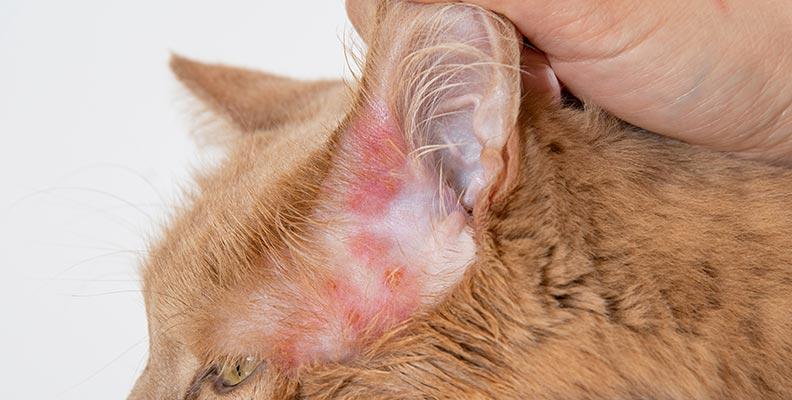
Having so much fur, you may wonder can cats get sunburn? Just as the sun poses risks to human health, those sunny days can also cause health problems for our feline friends. Excessive exposure to the sun, especially in warmer climates, can lead to sunburn, solar dermatitis and skin cancer. When it comes to solar dermatitis, it's good to be able to recognise the symptoms, so the condition can be treated early.
Your cat's skin normally improves over winter but worsens in the summer and deteriorates year on year. If you notice any changes to your cat’s skin especially around the sparsely haired areas, such as the ears or nose, it’s important that you contact your vet to arrange a check-up.
Prompt assessment is required to make sure solar dermatitis in cats is caught in the early stages.
What is solar dermatitis in cats?
Solar dermatitis in cats is a skin condition that affects the thinly haired areas such as the ears, nose, eyelids and lips. It occurs in cats with lower levels of pigmentation. White cats are commonly affected and at the highest risk. Cats with white patches on the thinly haired areas or have areas of hair loss are also at risk.
The UVA and UVB radiation in the ultraviolet light found in sunlight is thought to cause sunburn to the pale or thinly haired area causing damage to skin cells, cell death and an immune reaction. This causes skin inflammation and redness to the skin of the affected areas.
This can progress to solar dermatitis in cats where their skin may look pink and scaly. Common symptoms of solar dermatitis in cats are scaling, crusting, erosions and ulcerations on their skin. Sometimes their ear tips will appear to be curling.
This may look like other types of skin disease and so it’s essential that such changes are checked by your vet. If left untreated solar dermatitis can start progressing to squamous cell carcinoma which is a type of skin cancer.
How will my vet diagnose solar dermatitis in my cat?
Your vet will initially do a full examination of you cat. It’s likely that your vet will recommend skin biopsies of the affected areas and often multiple biopsies are taken of the skin - these are sent to a laboratory for testing.
Biopsies or fine needle aspirates of local lymph nodes will probably be recommended, especially if your vet is worried that the solar dermatitis has progressed to squamous cell carcinoma.
They may also recommend x-rays of the chest to check for spread to the lungs or an ultrasound scan of the abdomen to rule out spread to abdominal organs. Your vet will discuss the most appropriate tests for your cat’s own individual needs.
How to treat solar dermatitis in cats?
Your vet may recommend some of the worst affected areas are surgically removed, especially if they’re concerned about the possibility of progression towards skin cancer in the area. If squamous cell carcinoma is diagnosed, it’s likely that your vet will advise pinnectomy, which is surgical removal of the whole ear.
Less commonly used treatments include cryosurgery or radiation therapy among others. If secondary infections are present your vet may need to start antibiotics or topical treatments. Pain relief is likely to be needed if the area is very inflamed or sore. Your vet will guide you on the treatment needs specific to your pet.
Can solar dermatitis in cats be prevented?
Because cat’s sunburn, particularly cat’s sunburnt ears, can lead to solar dermatitis you may wonder how to prevent cat sunburn. The most effective way is to limit exposure. It may not be possible to keep your cat indoors all the time but at least staying indoors between the hours of 10am and 4pm can reduce exposure to the highest levels of sunshine and UV light.
For cats who will still seek windowsills to sunbathe on, sunscreens can be fitted to windows to reduce exposure. Cat’s who are at risk of solar dermatitis should have pet sun block applied. Be careful as some sun block can be toxic to cats, so make sure you select a non-toxic, pet safe, human sunscreen/total sun block. Apply the sun block to areas of low pigmentation and/or thin hair such as the nose and ears.
Solar dermatitis is a common disease in white cats and can progress to skin cancer. When areas such as the nose are affected, this can sometimes mean that surgical removal isn’t possible. If your cat is white or has thin hair or hair loss all measures should be taken to limit sun exposure where possible.
Any changes to the skin on the ears, eyelids, nose or lips should be checked by your vet at an early stage. With early assessment and intervention, your pet has a better chance of living a long and happy life.
Everypaw Cat Insurance
Everypaw's Cat Insurance comes with 24/7 unlimited access to vets and vet nurses that can help with your pet's health, care, nutrition and behaviour. So you can rest assured your kitty will be well looked after.
Content created by Vetstream Vetlexicon - Clinical content for veterinary professionals
Vetlexicon is the world’s largest peer-reviewed online clinical reference source for veterinary professionals. All our content is written and peer-reviewed by over 1,000 of the world’s leading veterinarians, ensuring relevance, accuracy and quality.
- Marsella R, Mason I & Scarff D (online) Dermatitis: solar. In: Vetlexicon Felis. Vetstream Ltd, UK.
- Vetlexicon Ltd (online) Solar dermatitis. In: Vetlexicon Felis. Vetstream Ltd, UK.


