How to Deal with Cat Incontinence
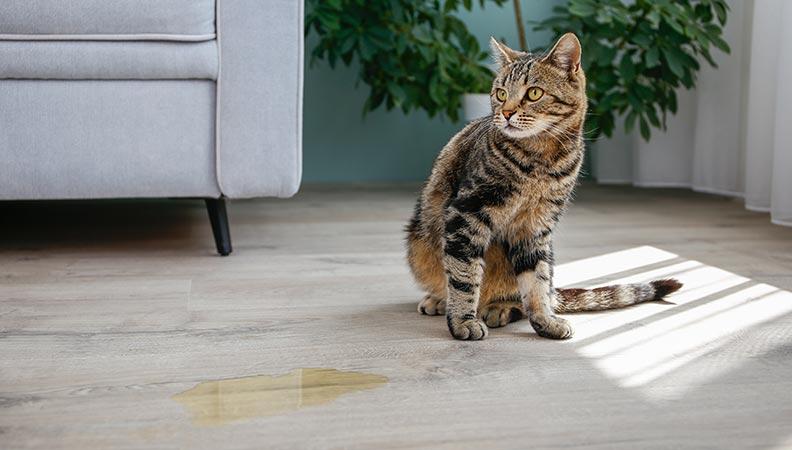
There are two types of incontinence in cats: urinary and faecal. Urinary incontinence is the involuntary passing of wee, and faecal or bowel incontinence is the involuntary passing of poo. When your cat is incontinent, it often means they're not able to hold it in long enough to reach their usual toileting place and will have accidents while sleeping.
Cats are naturally clean and prefer to bury their poo, which makes them easy to litterbox train. If your cat starts having regular accidents outside of its litter tray, it's worth a visit to your vet to determine the cause.
What Causes Incontinence in Cats?
Incontinence in cats can be caused by a neurogenic disease (disease of the nervous system), a congenital abnormality, a spinal injury, or a urinary tract disease. Incontinence is common in senior cats due to the weakening of the muscles used to hold in their wee and poo until they've reached an appropriate toileting area.
Obesity can also affect a cat's toileting habits as it weakens the muscles, and the fatty tissues add pressure on the bladder. Obesity is also associated with urolithiasis (kidney stones), which is a common cause of lower urinary tract disease in cats.
There are two categories of bowel incontinence: reservoir or sphincter incontinence.
Reservoir Incontinence
Reservoir refers to a disease of the rectum, whereby the rectum is unable to store the poo like it should do until the cat is ready to toilet. This can occur as a result of diarrhoea, cancer, inflammatory bowel disease or any disease that affects the intestines.
Sphincter Incontinence
Sphincter incontinence refers to the anal sphincter muscle being unable to remain closed, so poo can leak out. This can be caused by an anal wound or mass, or nerve damage which stems from the spinal cord.
Manx Syndrome in Cats
Manx cats can be affected by Manx syndrome, an inherited condition that causes abnormal development of the tail end of the spine. This usually results in them having no tail and affects the development of the nerves around this area. This can lead to problems controlling their bladder and bowel.
How Do You Know if Your Cat Is Incontinent?
The most obvious sign of cat faecal incontinence is finding cat poos in unusual places, like near the door or close to their litterbox. This suggests that your cat hasn't been able to hold it in for long enough. Their poos are often soft and may contain blood or mucous.
Sphincter incontinence can cause redness, inflammation, or leakage from your cat's rectum, prompting your cat to lick the area more than usual. If there's nerve damage, your cat will have difficulty walking and may carry their tail differently.
The most common sign of urinary incontinence in cats is involuntary leakage of urine outside of their litter box. You may also notice them obsessively licking between their hind legs.
Other Causes of Inappropriate Toileting
Inappropriate toileting or elimination occurs when a cat urinates or defecates outside of the area it has been trained to go. This is the main symptom of incontinence, but there are other possible causes for your cat toileting outside of their litter box:
- Behavioural problems: litterbox aversion, submissive urination, urine marking, stress or anxiety, incomplete house-training.
- Cognitive dysfunction syndrome: this is a type of dementia that affects senior cats, where the cat forgets their house training.
- Constipation: this can lead to an aversion to the litterbox, so the cat goes for a poo elsewhere.
- Diabetes and renal disease: these both cause excessive urination.
- Diarrhoea
- Joint pain/arthritis: These conditions make it difficult to climb into the litter box.
- Seizures: cats can have toileting accidents during a seizure.
- Thyroid disease: this can cause diarrhoea, excessive drinking and weeing.
- Urinary tract infections, bladder stones and bladder cancer.
Your vet will be able to diagnose and treat the cause of inappropriate urination and defaecation. To do this, they'll need to perform a physical exam and run some tests. This may include urine and faecal analysis, blood tests, radiographs, and CT or MRI scans.
Treatment for Cat Incontinence
The treatment for urinary or bowel incontinence depends on the underlying cause. For urinary incontinence, muscle stimulants can be given to help your cat gain control over their muscles again. Feeding your cat a healthy diet will promote digestive and urinary health, preventing the formation of urinary infections and bladder stones.
Male cats are more prone to recurring urethral blockages than females because they have a longer urethra that narrows at the end. The urethra is the tube through which urine travels from the bladder and then exits the body through the genitals. Your cat can undergo surgery to widen and shorten the urethra.
Bowel incontinence in cats' treatment includes anti-diarrheal and anti-inflammatory medication prescribed by your vet. This may be used as a sole treatment or in addition to other specialised treatments. Surgery may be necessary for a wound or mass.
Nerve damage is difficult to treat, and there's no treatment for older cats with cognitive impairment. In these situations, the focus will be on managing the condition to enable your cat to have a good quality of life.
Should I Put Down an Incontinent Cat?
It depends on the cause and possible treatment options. If the condition is untreatable or the treatment isn't working, and their quality of life is being affected, then euthanasia may be the kindest option. Speak to your vet for more advice on whether euthanasia should be considered for your pet.
Managing Incontinence in Cats
If your cat's incontinence is untreatable, you'll need to focus on helping your cat to live comfortably with the condition.
They'll need lots of litter boxes with low sides, so they've got quick and easy access to one at all times. It's important to keep your cat clean from any poo or wee, so you'll need to wash them regularly. Keep the fur around their hind ends short so there's less hair to hold any urine and faeces.
Cat incontinence pads are available, but if using them, make sure they're changed regularly. While incontinence pants for cats are great for keeping your home clean, they prevent your cat from cleaning themselves. Try to give your cat some regular pant-free time and make sure to clean them every time you change the pants.
Can Cats Become Incontinent?
If you start to find your cat going to the loo outside of their litter tray, it could be a sign that your cat is incontinent. There are many causes for the loss of bowel or bladder control, so your vet will need to run some tests to find out what's going on.
Cat incontinence treatment depends on the cause. In some cases, there's no treatment, so you'll need to focus on managing the condition. As a pet parent, you'll naturally worry about what's best for your pet.
Most cases of incontinence can be managed effectively, but in some cases, euthanasia is the kindest option.
Everypaw Cat Insurance
Everypaw's Cat Insurance comes with 24/7 unlimited access to vets and vet nurses that can help with your pet's health, care, nutrition and behaviour. So you can rest assured your kitty will be well looked after.
Content created by Vetstream Vetlexicon - Clinical content for veterinary professionals
Vetlexicon is the world’s largest peer-reviewed online clinical reference source for veterinary professionals. All our content is written and peer-reviewed by over 1,000 of the world’s leading veterinarians, ensuring relevance, accuracy and quality.
- Mardell E & Watson P (online) Urinary incontinence. In: Vetlexicon Felis. Vetstream Ltd, UK.
- Ropski M & Pike A (online) Indoor toileting. In: Vetlexicon Felis. Vetstream Ltd, UK.
- Ropski M & Pike A (online) Indoor marking. In: Vetlexicon Felis. Vetstream Ltd, UK.
- VetFolio & Vetstream Ltd (online) Inappropriate elimination. In: Vetlexicon Felis. Vetstream Ltd, UK.
- Vetstream Ltd (online) Spraying - urine marking in the house. In: Vetlexicon Felis. Vetstream Ltd, UK.


