Cruciate Ligament Injury in Dogs
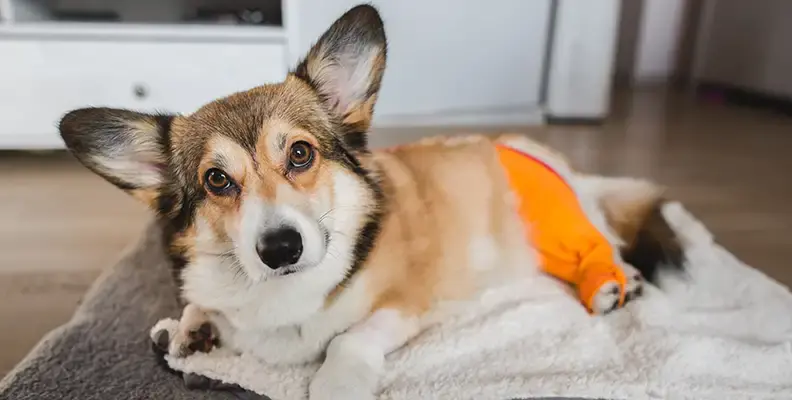
It’s not only footballers that suffer from cruciate ligament damage – it's a common problem in dogs too, resulting in pain and hindleg lameness. Damage to the joint called the stifle (the knee) can result in slight or partial tears or a complete rupture of the cruciate ligament in a dog. While it can be managed with exercise restriction in small dogs, surgery is usually needed for dogs to get back to being fully active.
Dog cruciate ligament surgery can be expensive, and different methods can be used to repair the ligament. Your vet will discuss the options available so the best treatment plan for your dog can be implemented.
What is the cruciate ligament in dogs?
There are 2 cruciate ligaments in each stifle knee joint of the dog. They're a bit like 2 strong elastic bands. The ligaments join the bones above and below the knee joint in the hindlimb. They stop the shin bone below the knee moving in front of the thigh bone (femur) when weight is placed on the knee.
Damage to the ligaments can occur if the knee is twisted. A ruptured cruciate ligament is often seen in athletic dogs that jump or turn suddenly. The equivalent ligament in humans is the anterior cruciate ligament or ACL.
Canine cruciate ligament disease (sometimes called cranial cruciate ligament or CCL disease) can also occur in some medium to large breeds like the Labrador Retrievers and Rottweiler. These dogs have ligaments that degenerate over time and become weak. It can also affect older dogs that may have weakened ligaments that tear easily. Obese dogs can also be prone to this type of injury due to the excess weight on their joints.
A cruciate ligament injury in dogs is not always caused by a single dramatic accident. In many cases, the ligament fibres weaken gradually before they tear, which is why lameness may appear after a normal walk, a jump off the sofa or a quick turn in the garden. Some dogs are comfortable after resting for a few hours, then lame again after exercise, which can suggest a partial tear or early cruciate disease rather than a simple sprain.
What are the symptoms of a cruciate ligament injury in dogs?
Hindlimb lameness, swelling of the stifle joint, pain and joint instability are typical of cruciate ligament injury. Cruciate ligament dog symptoms may start slowly with dogs only appearing to be lame off and on. These dogs will have slight or partial tears, but partial ruptures can progress to full ruptures.
However, many dogs with a cruciate ligament injury typically will have been running around and then suddenly pull up and hop on one leg. If the ligament has ruptured (torn), the dog tends to stand with their back toe touching the ground, not putting any weight on the affected leg.
How to diagnose cruciate ligament injury in dogs?
If your vet suspects a cruciate ligament injury in your dog, they'll need to conduct examinations and tests to fully diagnose why your dog isn’t weight bearing on the affected hind limb. Your vet will carry out an orthopaedic assessment to check for any swelling of the joint, fluid build-up and thigh muscle wastage. They'll check the hips, feet and spine to make sure another painful condition is not contributing to the limp.
In some cases, the dog is too tense or sore to examine fully while awake, so sedation or anaesthesia allows a safer, more accurate assessment of knee movement. Your vet will examine the joint by manipulation and feeling for any abnormal movement. X-rays may also be taken to check for any other damage to the knee joint(s) which may also need surgical repair.
What's the treatment for a canine cruciate ligament injury?
Treatment options for conservative management may be sufficient for small dogs with partial tears. This involves strict bed rest followed by a controlled exercise programme along with pain relief. Your vet may also advise weight loss and physiotherapy for your dog. If the problem persists, surgery will be recommended to repair the ligament.
The point of rest is not just to stop your dog limping for a few days, but to protect the knee from repeated instability. A cruciate ligament injury in dogs can damage the meniscus, the shock-absorbing cartilage inside the joint, and this can cause ongoing pain even after the initial injury. This is one reason prompt assessment is important, especially if your dog is suddenly non-weight bearing, struggling to rise, or becoming more lame despite rest.
There are several surgical options for cruciate ligament rupture. For small breeds weighing less than 15-30 kg, a fabellotibial suture may be used to stabilise the ligament. The suture is placed on the outside of the stifle and the procedure is known as an extracapsular repair.
For large dogs over 30 kg, specialised surgical techniques called tibial plateau levelling osteotomy (TPLO), or tibial tuberosity advancement (TTA) are the best options. Both of these osteotomy procedures involve the use of metal plates and screws.
These are inserted into the knee to fix it in place to change the angle of the bones in the knee and stop abnormal movement between the shin bone and thigh bone. In both TTA and TPLO surgeries, the ligament is not replaced but is no longer needed.
How much is dog cruciate ligament surgery?
The cost depends on the type of surgery, the size of dog and the veterinary clinic. Referral to a specialist orthopaedic surgeon may be required. Cruciate ligament dog surgery cost is high and can range from £2000 up to £6000, plus the additional expenses including X-rays, potential anaesthesia costs and post-op check-ups and medication. Your vet may also recommend post-op rehabilitation like physiotherapy and hydrotherapy to aid their recovery, and costs for these can soon mount up.
How long will it take for my dog to recover?
If managed conservatively, most dogs will take 5-6 months to be back to normal, although there may be a slight gait abnormality. Dogs that have had surgery should be sound by 3-4 months. During the recovery period, strict rest and pain relief followed by a controlled return to exercise will be needed for your dog.
Your vet will give you detailed instructions on the amount of exercise your dog should have to give them the best chance of recovery. A gradual return to exercise will allow the injured leg to strengthen but avoid complications that can prolong recovery. Physiotherapy and hydrotherapy can help your dog regain strength and mobility.
Recovery should be steady and controlled rather than rushed. Short lead walks, avoiding stairs and slippery floors, and preventing jumping on and off furniture can all reduce strain on the healing joint. If your dog seems brighter after surgery, it is still important to follow the exercise plan carefully, as too much activity too soon can delay healing or cause complications.
Once recovered, your dog can resume their normal walking and running routine, but strenuous activities may not be allowed. This is because of the likelihood that the ligament in the other leg will tear, and the dog will require further surgery.
Dogs that have had cruciate ligament damage have a high risk of developing arthritis later in life. Extra care should be taken to keep their weight under control to avoid putting extra strain on their joints. Cruciate disease in dogs is often progressive rather than a one-off accident, so monitoring the other hind leg, keeping your dog lean and following a controlled recovery plan are all important parts of treatment.
The right treatment plan depends on your dog as an individual, taking into account their size and weight, age, activity level, any pre-existing medical conditions and the degree of knee instability. These can all influence the best care for your dog, and the most likely to restore comfortable movement. Protecting your pet's health means dealing with pain promptly but also considering the longer-term risk of arthritis and further ligament damage.
In the mild cases or in some small dogs, rest, weight control, physiotherapy and carefully prescribed anti-inflammatories may help reduce pain and swelling while the joint settles. However, this course of treatment should only be exercised under veterinary guidance. Where the knee remains unstable, surgery is often recommended because it stabilises the knee, improves weight bearing and reduces ongoing damage inside the joint.
Follow post-operative instructions and your dog will regain limb function and be back enjoying their daily dog walks again in no time. Many dogs with cruciate ligament disease can go on to damage the ligament in the other leg and need further surgery. In the long-term, osteoarthritis may develop in the joint, so it's important to keep your dog at a healthy weight to reduce this risk.
Everypaw Dog Insurance
Our pets have a way of surprising us, and while you can’t always plan for every health concern, dog insurance can help you feel more prepared for the unexpected. Everypaw's Dog Insurance comes with 24/7 unlimited access to an expert vet team that can help with your pet's health, care, nutrition and behaviour. So you can rest assured your pup will be well looked after.
Content created by Vetstream Vetlexicon - Clinical content for veterinary professionals
Vetlexicon is the world’s largest peer-reviewed online clinical reference source for veterinary professionals. All our content is written and peer-reviewed by over 1,000 of the world’s leading veterinarians, ensuring relevance, accuracy and quality.
- Vetstream Ltd (online) Cruciate ligament rupture (torn knee ligaments). In: Vetlexicon Canis. Vetstream Ltd.
- Joseph Harari & Mark Rochat (online) Stifle: cranial cruciate ligament disease. In: Vetlexicon Canis. Vetstream Ltd.
- Vetstream Ltd & Mark Straw (online) Tibial plateau leveling operation (TPLO). In: Vetlexicon Canis. Vetstream Ltd.


